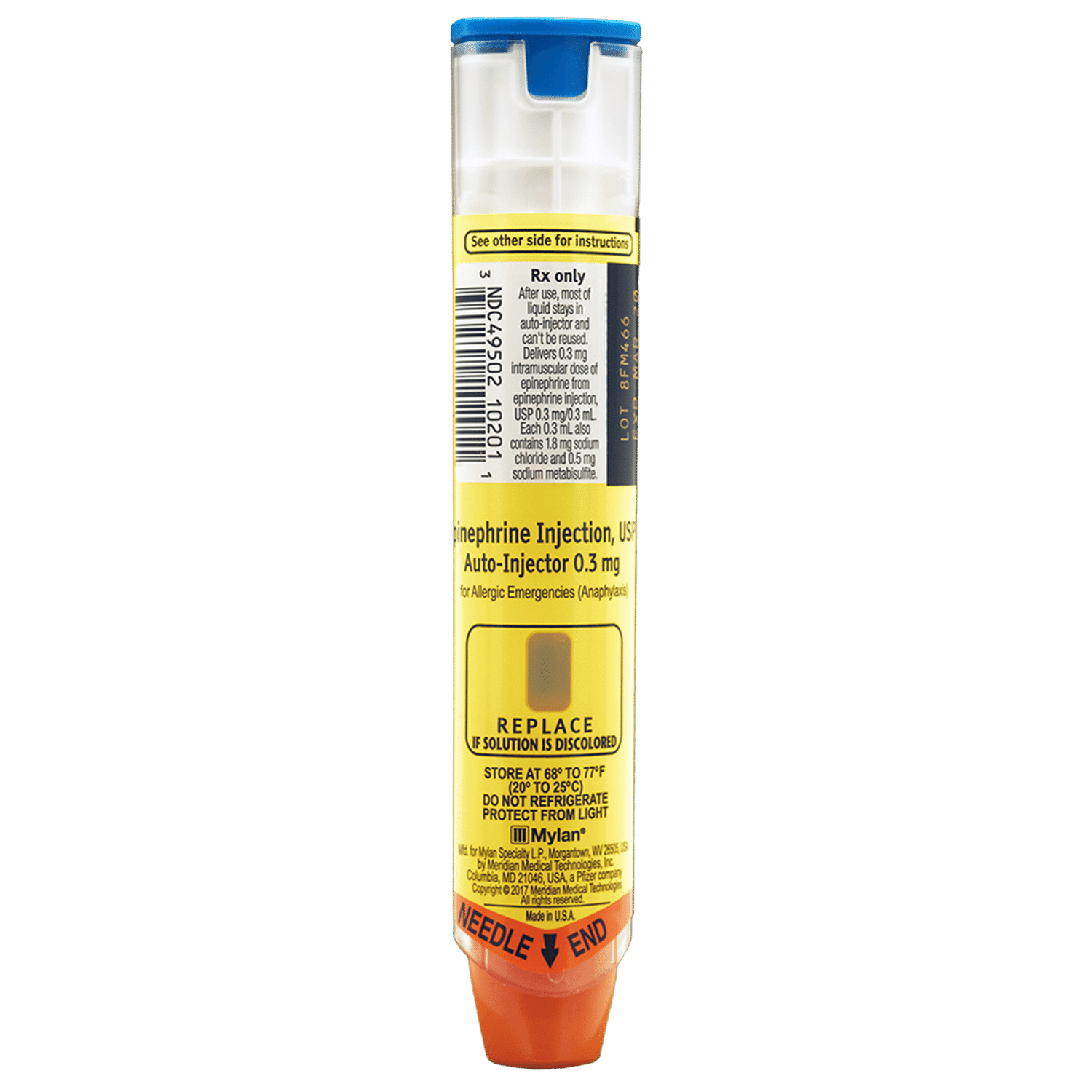
Administration of Epinephrine Auto-Injector (EpiPen)

In this course, you will learn the essential steps and knowledge to correctly perform the Epinephrine Auto-Injector procedure on another person. This course will take you through the proper steps to safely use an EpiPen alongside with correct terminology and common mistakes so you're equipped with all the knowledge to make wise, educated decisions in emergency situations.

This video will demonstrate the steps to safely recognizing symptoms and the actions required under circumstances of medical emergencies.

Feel free to pause, rewind and rematch as many times as you feel necessary

EpiPen
Blue Safety Cap
Expiry Date
Orange Needle Cover
Adrenaline Viewing window
You can always go back and review until you feel confident
Hover over the box to reveal function
Always remember, "Blue to the sky, orange to the thigh"

Try putting the steps in order

Identify the symptoms of systemic anaphylaxis. Ensure the expiry date is still valid and solution is clear. Form a fist around the midsection
Position the orange tip at a 90-degree angle against the vastus lateralis. Swing and push the injector firmly until a distinct "click" is heard or felt
Withdraw the unit and massage the injection site for 10 seconds. Place the used unit into a designated sharps container
Maintain the device firmly against the thigh for a full 3 to 10 seconds to ensure the entire dose of epinephrine is delivered via the pressurized plunger
Remove the blue safety release cap by pulling it straight up while maintaining a firm grip on the carrier tube
Identify the injection site. If necessary, clear the area of bulky clothing
You can always go back and review until you feel confident
drag the boxes into the empty boxes
A mistake is just an opportunity to grow.

Common Fail Points and Mistakes to look out for...

Improper Grip
Placing a thumb over the end of the device, which can lead to accidental self-injection into the digit.
Inadequate Force
Failing to hear the "click," resulting in the needle not penetrating the subcutaneous layer.
Premature Withdrawal
Removing the device before the 3-second minimum, leading to an incomplete dose.
Accidental self-injection
Attempting to deploy the device with the needle end facing the user's thumb.
Incorrect injection site selection
Attempting to inject into a vein or the gluteus muscle.
You can always go back and review until you feel confident
look out for these crucial points

Select 1 out of the 4 options

Q10. Which side of the EpiPen should face up as you inject it?

You can always go back and review until you feel confident
Select the most appropriate answer
A mistake is just an opportunity to grow.

We must understand the "why" to fully grasp an idea.

1
We wait for the "click" signals because that the needle has deployed into the intramuscular space. Wait 3 seconds until the dosage is completely injected.
2
Remove the blue safety release cap by pulling it straight up while maintaining a firm grip on the carrier tube. This action arms the internal spring-loaded firing mechanism.
3
we form a fist around the midsection of the injector, ensuring no digits cover either end of the device to avoid injecting yourself, and because it allows a stable grip
4
we massage the injection area after dosage completion because it stimulates systemic absorption
You can always go back and review until you feel confident
This will help you make informed decisions on your own

For the final assessment, identify the mistake from given scenarios

Case 10: User holds the pen blue side up and injects the needle into the Vastus Laterus. They remove the injection immediately afterwards.

You can always go back and review until you feel confident
Identify where the user went wrong and how you would correct it
A mistake is just an opportunity to grow

🎉🎉🎉 Congratulations!

you've successfully reached the end of the course

you've learned the function of the epipen, how to perform the injection and what mistakes to avoid. You are now well equipped to conduct an injection in an emergency